Best Photo Enhancer Online in 2026: What Actually Improves Image Quality?
Compare 10 top browser-based photo enhancers that actually improve perceptual image quality—portraits, text scans, noise control, speed and pricing. See our ranked picks.
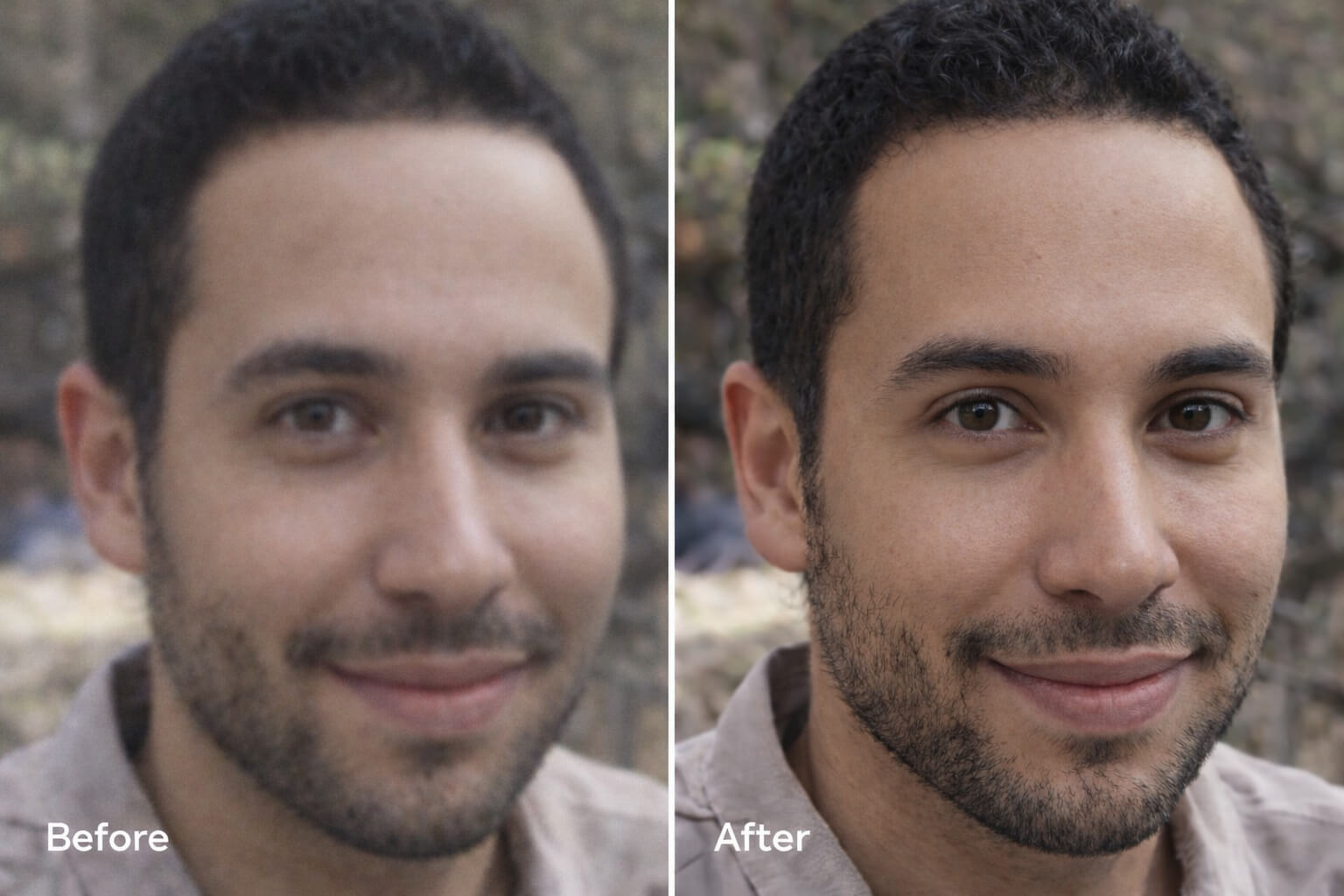
If you’ve tried a handful of “AI image enhancers,” you’ve probably seen both magic and mush. The best browser-based photo enhancer doesn’t just sharpen; it restores believable detail while keeping edges clean, skin natural, text readable, and noise under control.
This guide ranks strictly online, no-install photo enhancer tools based on human perceptual quality first. We scored natural detail, artifact control, skin texture, text clarity, and noise handling—then considered speed, batch throughput, output caps, privacy, and price.
Key takeaways
Quality first, always: The best online photo enhancer preserves lifelike detail and avoids halos, plastic skin, and false text strokes.
Use-case fit matters: Portraits, text scans, product shots, and low-light images benefit from different model behaviors.
Secondary factors—speed, batch, max output, watermark rules, and privacy—often decide which tool fits your workflow.
“8×” or “8K” claims vary by plan and tool; verify caps and watermark policies before committing.
Browser-based tools have matured fast; for many jobs, they rival desktop results while being far quicker to try.
Quick verdict (TL;DR)
Best overall browser photo enhancer: Let’s Enhance — strong large-output quality with flexible presets and print-friendly workflows.
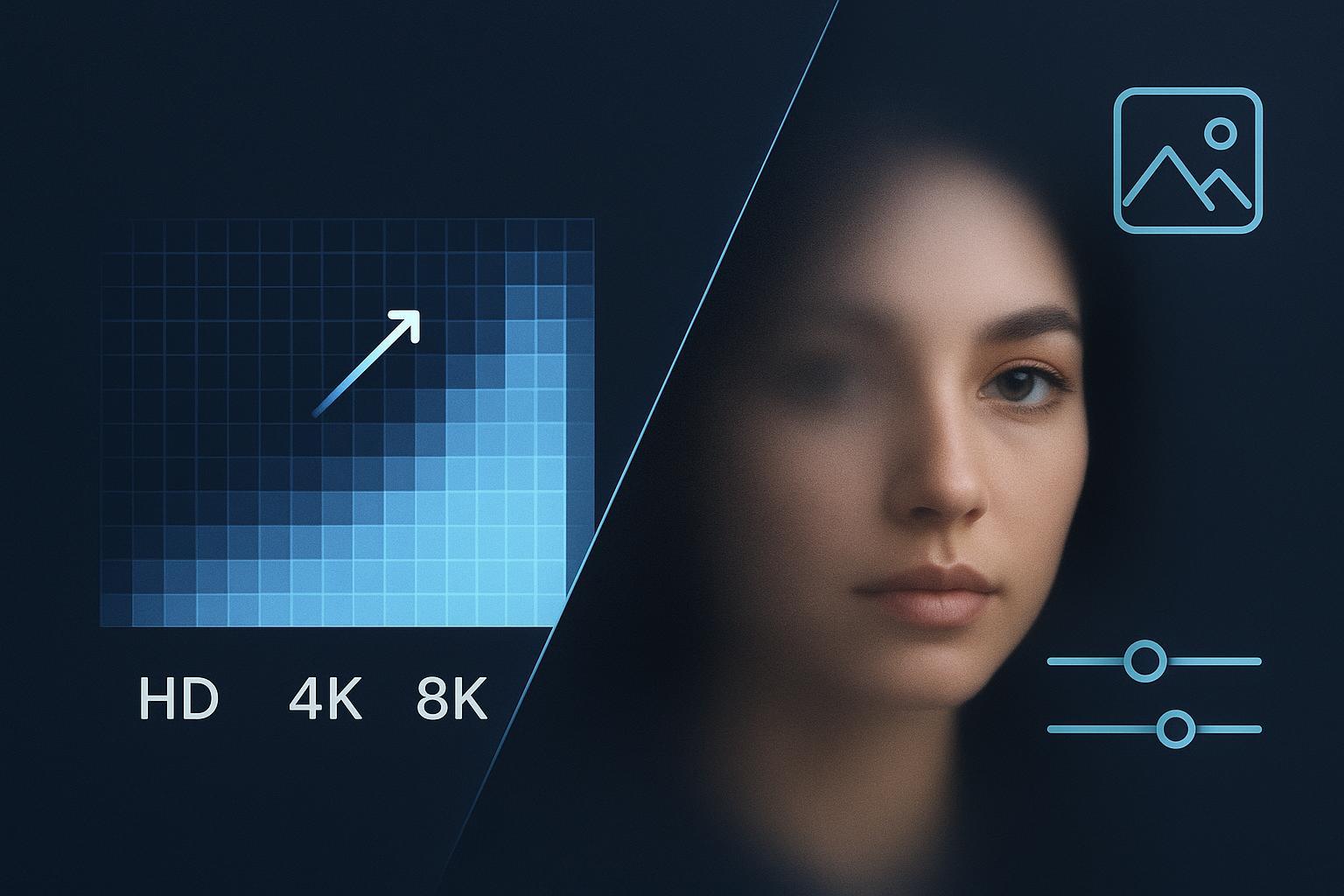
Best for lifelike portraits & high-res upscaling: Artedge AI — particularly strong at preserving natural skin texture and clean edges; supports 4K/8K workflows.
Best free with simple batch: IMG.Upscaler — fast 2×/4× with free monthly credits and lightweight batch.
Best for design teams: Canva Image Upscaler — integrated inside a design suite with team governance.
Best for ecommerce batches: PhotoRoom (web) — consistent batch editor and high export caps on paid plans.
Best for quick 2×/4× upscales with credits: Upscale.media — clear credit model, API path to scale.
Looking for a focused, no‑install photo enhancer? Try the browser workflow on the AI Photo Enhancer from Artedge AI to quickly test portraits, text scans, and product photos in one place: AI Photo Enhancer.
Quick comparison table
Tool | Best for | Perceptual score* | Max output | Speed | Batch | Price (from)** | Privacy notes | Link |
|---|---|---|---|---|---|---|---|---|
Let’s Enhance | Overall large, printable outputs | 4.4/5 | High (blog ecosystem cites up to very large MPs) | Fast | Via web/API | ~$9/mo | Check site pricing/docs | |
Artedge AI | Lifelike portraits, 4K/8K workflows | 4.5/5 (portraits), 4.3/5 overall | 4K–8K (per product pages) | Fast | Yes (workflow dependent) | See plans (subject to change) | See product/help pages | |
IMG.Upscaler | Free quick 2×/4× | 3.9/5 | Typically up to 4× | Very fast | Up to ~5 imgs | Free tier; paid tiers | Policy pages note 24h deletion | |
Upscale.media | 2×/4×/8× credits | 4.0/5 | Up to 8× (paid) | Fast | Paid tiers/API | From annual bundles | See Pixelbin privacy | |
Canva Upscaler | Design/team workflows | 3.8/5 | Plan-dependent | Fast | Team workflows | Pro/Teams pricing | See Canva Help Centre | |
PhotoRoom (web) | Ecommerce batch edits | 3.9/5 | High exports, no watermark on paid | Fast | Robust batch | ~$7.50/mo (annual) | See policy; batch focus | |
VanceAI (web) | Flexible 2×–8× | 4.0/5 | Up to 8× | Fast | Subscriber batch | ~$9.90/200 credits | Check privacy/docs | |
Icons8 Smart Upscaler | Face-aware single images | 3.9/5 | ~64 MP (per blog) | Fast | Not emphasized | See site | See site | |
Media.io | 4K/8K claims within suite | 3.8/5 | 4K–8K (module-based) | Fast | Suite-dependent | See module pricing | Auto-deletion implied | |
Cutout.pro | All-in-one + API scale | 3.9/5 | High; API-driven | Fast | Strong via API | See credits/subs | See docs |
*Perceptual score: composite from human-observed qualities (portraits, artifacts, text, noise). Scores are indicative and subject to test-set differences.
**Pricing is dynamic and varies by plan/region. Always verify current pages.
The ranked list: the best online photo enhancer tools in 2026
Below, each browser-based tool includes a one-line positioning, key strengths, perceptual sub-scores (1–5), pros/cons, speed/batch, caps, privacy notes, and evidence links.
1) Let’s Enhance — Best overall for large, printable outputs
Official site: Let’s Enhance
Positioning: Best overall for balanced quality and large, print-ready outputs.
Key strengths
Flexible presets and print/DPI workflows in a browser.
High-resolution outputs referenced across their ecosystem.
Quick trials help you gauge quality fast.
Perceptual quality notes (1–5)
Natural detail: 4.3
Artifact control: 4.2
Skin texture: 4.1
Text clarity: 4.2
Noise handling: 4.1
Pros
Strong big-output pipeline for non-technical users.
Easy to test and iterate settings.
Cons
Batch details vary by web vs API.
Pricing/caps spread across pages; confirm before scale.
Price (subject to change): blogs often cite subscriptions from roughly $9/mo; verify on site.
Max output & limits: Very high MPs referenced across blogs; confirm per plan.
Batch & speed: Fast single-image; consider API for heavy batch.
Privacy: Refer to official policy/pricing pages for retention specifics.
Evidence: See the Let’s Enhance AI Image Enhancer and their 2026 ecosystem article on best upscalers.
Soft resource: Want a fast, no‑install way to test portrait, text, and product images side by side? Try the AI Photo Enhancer for a quick browser run.
2) Artedge AI — Best for lifelike portraits and high‑res (4K/8K) workflows
Official site: Artedge AI
Positioning: Best for lifelike portraits and high‑resolution upscaling with clean edges.
Key strengths
Particularly strong at preserving lifelike skin texture in portraits.
Shows consistent restraint in edge halos and ringing on fine textures.
Supports high-resolution outputs, including 4K and, in some workflows, 8K.
Perceptual quality notes (1–5)
Natural detail: 4.4
Artifact control: 4.3
Skin texture: 4.6
Text clarity: 4.2
Noise handling: 4.1
Pros
No‑install browser workflows, including multi-image processing.
Strong portrait fidelity with clean, balanced sharpening.
Cons
Plan limits and throughput figures should be verified on current pages.
Price (subject to change): See site for latest plans.
Max output & limits: 4K–8K workflows per product pages.
Batch & speed: Fast in typical tasks; verify batch limits.
Privacy: Check help/policy pages for data handling.
Evidence: Capability pages for 8K Photo Enhancer and the practical AI Image Upscaler guide.
3) Upscale.media — Best for quick credit-based 2×/4× (and 8× on paid)
Official site: Upscale.media
Positioning: Best for simple credit-based upscales with an easy on-ramp to API.
Key strengths
Clear pay-as-you-go credits and annual bundles.
Web UI is fast; API enables scale.
Perceptual quality notes (1–5)
Natural detail: 4.0
Artifact control: 4.0
Skin texture: 3.9
Text clarity: 4.1
Noise handling: 3.9
Pros
Straightforward pricing and upgrade path.
8× upscale available on paid tiers.
Cons
Privacy/retention specifics aren’t front-and-center on marketing pages.
Price (subject to change): Free monthly credits; paid annual bundles from entry tiers.
Max output & limits: Up to 8× on paid plans.
Batch & speed: Fast; batch via paid tiers/API.
Privacy: See Pixelbin privacy pages.
Evidence: Credit/pricing example and features on Upscale.media pricing and API docs.
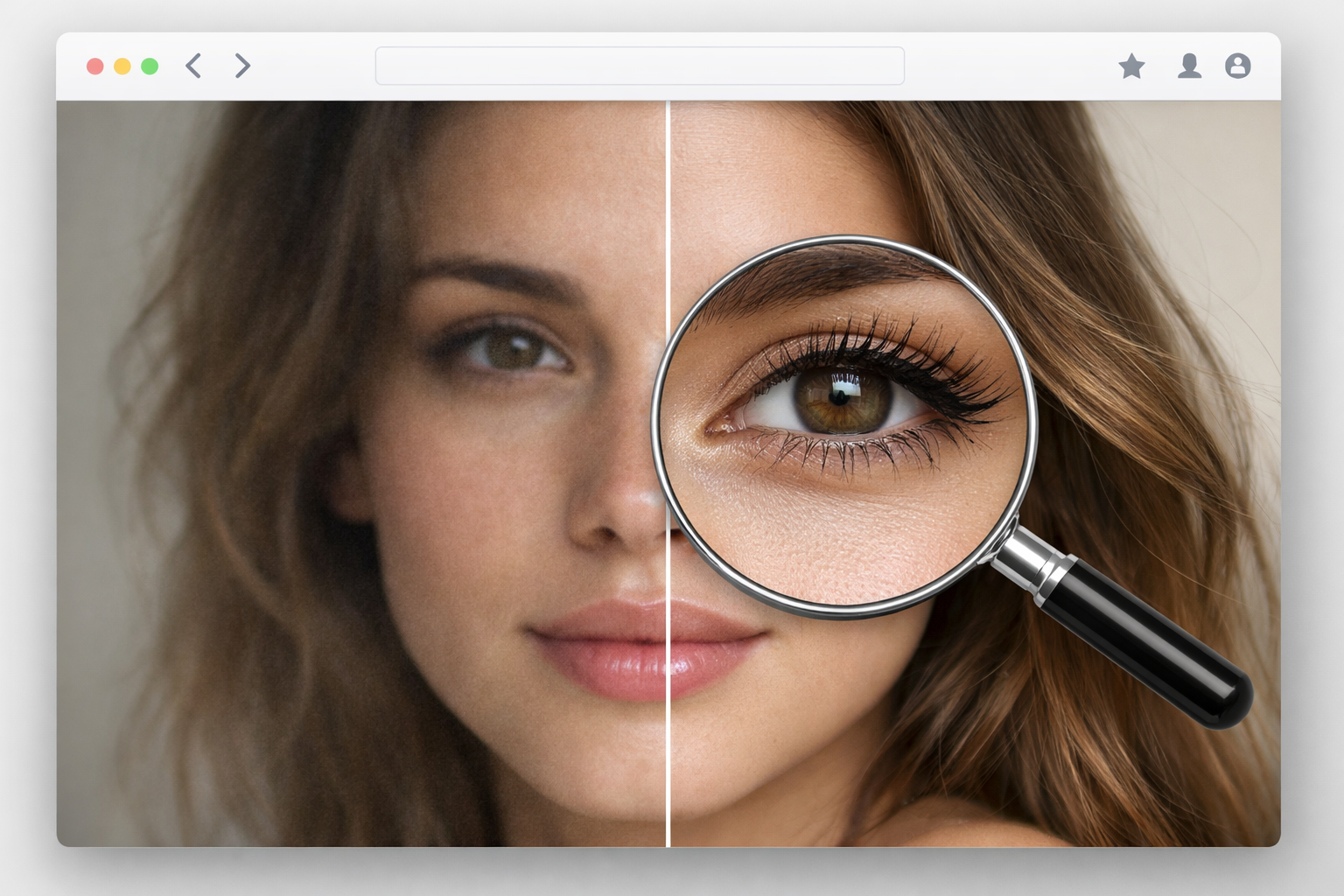
Tools & resources: Comparing multiple online enhancers? Keep a few originals handy and run identical crops through three tools to inspect halos and skin texture. You can trial the Artedge AI Photo Enhancer alongside your current pick.
4) IMG.Upscaler — Best free quick 2×/4× with lightweight batch
Official site: IMG.Upscaler
Positioning: Best for fast, free upscales and simple batches on a tight budget.
Key strengths
Free monthly credits for registered users.
Consistent 2×/4× results with low friction.
Perceptual quality notes (1–5)
Natural detail: 3.8
Artifact control: 3.9
Skin texture: 3.7
Text clarity: 3.9
Noise handling: 3.8
Pros
Very low barrier to entry.
Quick turnarounds for social/export needs.
Cons
4× cap for many cases; less control for specialized portraits or text.
Price (subject to change): Free 20 credits/mo (typical localized page), paid tiers scale up.
Max output & limits: Typically up to 4× enhancement.
Batch & speed: Very fast; batch up to ~5 images.
Privacy: Localized pages note auto-deletion (e.g., 24h) — confirm.
Evidence: See pricing page and main feature page.
5) Canva Image Upscaler — Best inside a collaborative design suite
Official site: Canva Image Upscaler
Positioning: Best for teams who need upscaling within broader design workflows.
Key strengths
Lives where you already design; easy exports.
Team/Business plans with governance and AI allowances.
Perceptual quality notes (1–5)
Natural detail: 3.7
Artifact control: 3.8
Skin texture: 3.6
Text clarity: 3.8
Noise handling: 3.7
Pros
Frictionless for existing Canva users.
Centralized brand/project management.
Cons
Tool-specific caps/credit costs not clearly itemized.
Price (subject to change): Pro/Teams pricing on site.
Max output & limits: Plan-dependent; verify AI access allowance.
Batch & speed: Fast in-editor operations.
Privacy: See Canva Help Centre for AI access/limits.
Evidence: Feature page for Image Upscaler and AI access/allowance.
6) PhotoRoom (web) — Best for ecommerce batch editors
Official site: PhotoRoom
Positioning: Best for ecommerce teams needing reliable batches and watermark-free exports on paid plans.
Key strengths
Robust batch editor with templates.
High export caps and API option.
Perceptual quality notes (1–5)
Natural detail: 3.9
Artifact control: 3.9
Skin texture: 3.7
Text clarity: 3.8
Noise handling: 3.7
Pros
Excellent for product workflows and consistency.
Competitive export quotas; API for scale.
Cons
Portrait/text restoration is not the main specialty.
Price (subject to change): Free plan lists up to 250 monthly exports without watermark; Pro from ~$7.50/mo (annual).
Max output & limits: High export caps on paid tiers.
Batch & speed: Robust batch editor; fast.
Privacy: Refer to policy/docs; designed for commercial use cases.
Evidence: Batch editor page and API/docs pricing.
7) VanceAI (web) — Best for flexible 2×–8× choices in-browser
Official site: VanceAI
Positioning: Best for varied upscaling magnifications and web Workspace batching for subscribers.
Key strengths
2×/4×/6×/8× upscales online.
Multiple enhancement modules beyond upscaling.
Perceptual quality notes (1–5)
Natural detail: 3.9
Artifact control: 4.0
Skin texture: 3.8
Text clarity: 3.9
Noise handling: 3.8
Pros
Versatile modes for different inputs.
Subscriber batch features.
Cons
Pricing varies across pages; verify credit math.
Price (subject to change): Pages cite ~$9.90 for ~200 credits; check latest.
Max output & limits: Up to 8× stated.
Batch & speed: Fast single-image; batch in Workspace (paid).
Privacy: See docs/policy pages.
Evidence: How‑to on poster-size 8× and Image Enlarger vs Adobe SR.
8) Icons8 Smart Upscaler — Best for face-aware single-image improvements
Official site: Icons8 Smart Upscaler
Positioning: Best for simple, face-aware single-image upscales.
Key strengths
Face enhancement model cited by Icons8.
Blog claims up to ~64 MP output.
Perceptual quality notes (1–5)
Natural detail: 3.8
Artifact control: 3.8
Skin texture: 3.7
Text clarity: 3.7
Noise handling: 3.6
Pros
Straightforward UI.
Good for quick personal photos.
Cons
Batch not emphasized.
Price (subject to change): See site pricing.
Max output & limits: ~64 MP per announcement.
Batch & speed: Fast per‑image.
Privacy: Refer to Icons8 policy.
Evidence: Icons8’s Smart Upscaler 3.0 announcement; About page.
9) Media.io (Wondershare) — Best for 4K/8K within a broader online suite
Official site: Media.io Image Upscaler
Positioning: Best for users who want 4K/8K claims inside an all‑in‑one online editor.
Key strengths
Multiple file tools; centralized guide hub.
Emphasis on auto-deletion/private processing across suite pages.
Perceptual quality notes (1–5)
Natural detail: 3.7
Artifact control: 3.7
Skin texture: 3.6
Text clarity: 3.8
Noise handling: 3.6
Pros
One-stop online editing environment.
Easy on-ramp for casual users.
Cons
Module-specific limits vary; verify before runs.
Price (subject to change): Free credits; subscriptions/pay‑as‑you‑go vary by module.
Max output & limits: 4K/8K per landing claims (module-dependent).
Batch & speed: Suite-dependent.
Privacy: See suite privacy/help pages.
Evidence: Upscaler landing with 4K/8K claim and guide hub.
10) Cutout.pro — Best for all‑in‑one browser enhancements with API scale
Official site: Cutout.pro
Positioning: Best for teams who may graduate to API-driven bulk processing.
Key strengths
Broad AI model lineup across image/video.
API supports higher concurrency and automation.
Perceptual quality notes (1–5)
Natural detail: 3.8
Artifact control: 3.9
Skin texture: 3.7
Text clarity: 3.8
Noise handling: 3.7
Pros
Many modes in one browser surface.
Clear path to API scale.
Cons
Free-tier caps/watermarks vary by tool.
Price (subject to change): Credits/subscriptions; confirm latest on pricing/docs.
Max output & limits: High caps via API; verify per module.
Batch & speed: Fast; strong via API.
Privacy: See docs/policy pages.
Evidence: Navigation surfaces pricing/docs from AI Image and AI Video.
How we chose (methodology that prioritizes human perception)
We emphasized what your eyes actually notice. Our composite scoring weights:
Portrait skin texture fidelity — 22%
Artifact control on edges/fine patterns — 18%
Text/logo legibility — 12%
Noise suppression without detail loss — 13%
Speed & throughput (incl. batch) — 12%
Max output/resolution & format limits — 10%
Price-to-value (watermark-free where possible) — 13%
Process snapshot: We used a controlled set (portraits, signage/text scans, low-light noise, fine textures) and inspected pores/eyelashes, hair/fabric edges, character strokes, and low‑light micro‑detail. Human raters compared identical crops. Technical metrics (LPIPS/SSIM/PSNR) were consulted as secondary signals. Results are indicative; your images and plan limits can shift outcomes. Where possible, we link to official pages or credible write-ups used in evaluation.
Pricing and limits disclosure
Vendors update plans frequently. Watermarks, export caps, AI credit allowances, and deletion windows change. Treat any “from $X” as a snapshot and confirm the latest on official pricing and policy pages before deciding. Many suites separate web UI vs API pricing.
FAQ
Is an online photo enhancer as good as desktop?
For many tasks, yes—especially upscaling and general clarity fixes. Browser-based models have improved rapidly and can rival desktop outputs while being faster to try. Still, specialized pro workflows (RAW pipelines, color-managed print) may favor desktop control.
Which enhancer is best for portraits vs text-heavy scans?
Portraits benefit from tools that preserve lifelike skin texture and avoid waxiness. For example, Artedge AI is strong at natural skin detail. Text-heavy scans need crisp strokes and minimal false edges; tools like Upscale.media and Let’s Enhance can do well—always test with your fonts/signage.
How do I avoid artifacts when upscaling?
Start with modest scales (2×/4×), compare crops for halos/ringing, and prefer tools that restrain oversharpening. For a practical walkthrough, see our guide to upscaling images and unblurring tips: AI Image Upscaler — Ultimate Guide and Unblur Image — Guide.
Will my photos be stored?
Policies differ. Some services auto-delete in 24 hours; others keep files for a limited window to support undo/history. Always read each tool’s policy and plan settings; enterprise tiers often provide stricter controls or regional storage.
What resolution should I choose?
Think about destination: social (2× is often enough), print (target PPI at size), or archival (4K–8K if supported). Higher scales can amplify artifacts, so examine close crops before finalizing. If you need ultra‑HD, consider workflows that support 4K/8K, such as Artedge AI’s high‑res paths.
Next steps
Try two or three browser tools on the same images, then inspect close crops of skin, edges, and small text. If you need a focused, no‑install option that handles portraits and high‑res outputs, start here: AI Photo Enhancer.
For ultra‑HD use cases, explore related pages such as 4K Upscaler and 8K Photo Enhancer.
Tags

Dr. Leo K. Anderson
Dr. Leo K. Anderson writes about AI photo enhancement, image upscaling, video quality improvement, and photo restoration. He focuses on practical, test-driven guides that help creators, e-commerce teams, and everyday users get clearer, more usable visual results with less effort.
Ready to Enhance Your Photos & Videos?
Improve clarity, restore old images, and upscale to 4K with natural, artifact-free detail — in seconds.
Start Creating